
How I Grow Hoyas in Pots Without Drainage Holes
I grow some of my Hoyas in clear plastic cups without drainage holes. My favorite part of this setup is that I can see the roots, check how wet the mix looks below the surface, and spot any water pooling at the bottom. The trick is to pour slowly and stop when water first reaches the bottom layer.
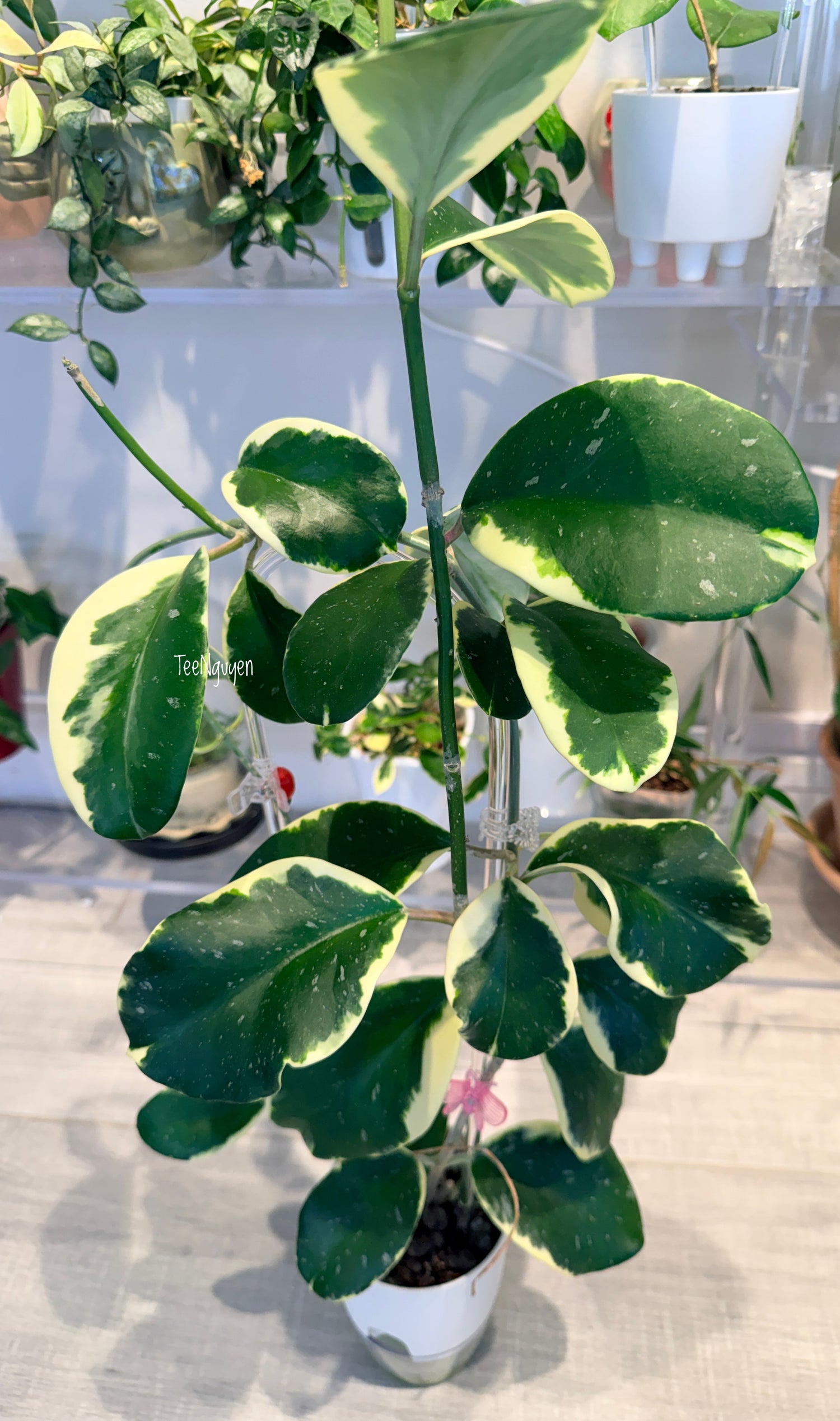
[Insert photo of my two Hoyas in clear cups here.]
Caption: Two of my Hoyas in clear cups. I can check the roots and see what’s happening at the bottom without taking the plants out.
How I set up the pot
- Container: I use a clear disposable plastic cup or a glass jar without drainage holes.
- Bottom layer: I add a layer of PON, aquarium rocks, or LECA. This layer gives me a visual cue for when to stop watering. It does not create drainage, and I don’t fill it like a reservoir.
- Growing mix: Use the substrate that works for your plant. For my Hoyas, I use a mix of tree fern fiber, perlite, and bark. The plant sits in this mix above the bottom layer.
[Insert the labeled no-drainage pot diagram here.]
Caption: Pour down the inside wall of the cup and stop when water first reaches the bottom layer.
How I water
- Check below the surface. The top can look dry while the bottom is still wet. If the lower mix is still wet or I see standing water, I wait.
- Pour slowly down the inside wall. I add a little water at a time. If only one side of the mix is getting wet, I move around the rim.
- Stop when water first reaches the bottom layer. If you add too much, just pour it out.
How I feed my Hoyas
My setup has included slow-release fertilizer, Root Vine from Dahon Garden, and slow-release K-Mag. That’s what I’ve used, not a list of products you need to buy or combine. If you’re trying this setup for the first time, I’d start with one feeding approach.
- Slow-release: Mix a houseplant fertilizer into the substrate according to the product label.
- Liquid fertilizer instead: Add diluted houseplant fertilizer to some waterings while the plant is actively growing, and use plain water between feeds.
Pros and cons of this setup
What I like
- Easy to monitor: Clear cups let me see the roots, the lower mix, and any water pooling at the bottom.
- Simple materials: I can reuse a clear cup or jar, and there’s no runoff onto the shelf during normal watering.
What to watch for
- Algae: Algae can grow where light reaches the moist mix, so you may see a green film along the inside of the cup.
- Overwatering: Extra water won’t drain on its own. If you see water level pass the bottom layer, pour it out rather than leaving it there.
My rule of thumb: Check the bottom before you water, not just the top. That’s the main reason I like using clear cups for this setup.